PIXNET Logo登入

Cha Thé Tea

跳到主文

部落格全站分類:不設分類

  • 相簿
  • 部落格
  • 留言
  • 名片
  • 1月 08 週二 200810:52
  • 嶢陽茶行


顛覆傳統中國茶的想像,以繽紛多彩的時尚包裝,提倡「隨時隨
地、輕鬆自在享受一杯好茶」的品茗新主張,非常受到時尚年輕
消費者喜愛,是目前市場上備受注目的嶢陽新品牌。 繽紛彩罐 a.高罐
◆日本綠茶、阿里山烏龍茶、阿里山金萱、東方美人、奇蘭香鐵觀音、武夷岩茶、鳳凰水仙、水沙連紅茶。
     (8種茶任您挑選)
b.扁小罐
◆茉莉小龍珠、桂花綠茶、梔子烏龍、玫瑰鐵觀音。(4種花茶任您挑選)
c.扁大罐
 ◆茉莉繡球、鮮綠茶、烏龍茶、金萱茶、鐵觀音、小福磚普洱茶。(6種茶任您挑選)
     ★另有多種口味,請參考茶種選購。      新袋茶主義
充氮袋茶(每盒16包×4g)
◆鐵觀音、凍頂烏龍、鮮綠茶、東方美人、水仙(5種茶任您挑選)。
繽紛袋茶(綜合5種茶,適合喜愛嚐鮮的您哦!)      輕巧鋁箔包
鋁箔包(50g/100g裝)
◆20多種茶任您挑選,
      請參考茶種選購。                                                                                                           

緣起

創始人

傳人

品質保證

長春

新竹國賓

信義店

烘培技藝

特別推薦

如何挑選品質優良的茶?

如何挑選適合自己的口味?

保存及沖泡方法

茶罐兒系列

沏定神閒系列

熟成茶普洱緊壓茶系列

限時限量特惠禮盒

沏定神閒禮盒

心賞禮盒

茶缶兒禮盒系列

茶具禮盒

加入會員

會員資料修改

推薦加入

查詢密碼

訂單查詢

購物車查詢

嶢陽熟成茶

未發酵茶

半發酵茶

全發酵茶

普洱茶

花茶

袋茶

繽紛彩罐

換貨說明

換貨申請

客服中心

嶢陽茶行
(繼續閱讀...)
文章標籤

Tea Guru 發表在 痞客邦 留言(0) 人氣(852)

  • 個人分類:Tea Taiwan
▲top
  • 1月 08 週二 200801:35
  • 創意達人--喜堂


創作者   喜堂茶業
作品種類   茶藝術
創作理念與特色
喜堂真心對待每一片茶葉,用心追求醇美的精神意境,品啜之間,清楚的感受每道烘焙製程,不急火,不慢工,善用簡單的茶,洗滌複雜緊張的生活。
從古老傳統,到現代創新。  在C與T之間,喜堂由此而起──
喜堂Cha-Tei,意為台灣鄉間親切的招呼語「呷茶」。C.T(喜堂縮寫)簡單的兩個字母裡蘊涵堂主阿亮創立喜堂的一切精神理念。注重從傳統中求創新的阿亮,認為識茶之人應對萬事萬物的根本之源存有尊敬之意,茶葉的根源來自中國(China),隨著漢人的東遷帶入台灣(Taiwan),為喜堂(C.T)的意涵之一。同時,以創新(Creative)的技術融入優良的傳統(Traditional)精神,為意涵之二。阿亮所著重的,本著根本之道進而從中產生新的意念,不僅於茶葉之中更是在生活之中。喜堂的精神起源。
創意達人
(繼續閱讀...)
文章標籤

Tea Guru 發表在 痞客邦 留言(0) 人氣(83)

  • 個人分類:Tea Taiwan
▲top
  • 1月 08 週二 200801:03
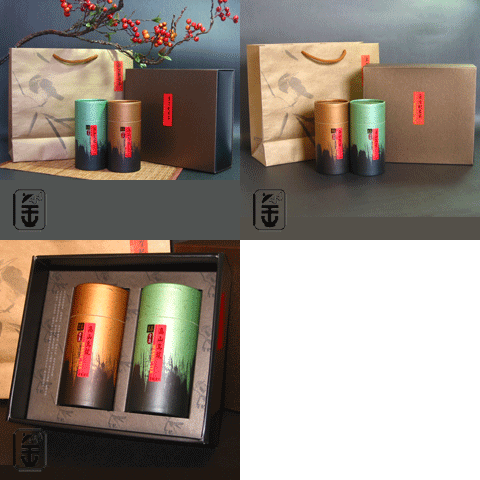
  • 喜堂茶葉品牌形象規劃與包裝設計


廠商

    喜堂茶葉股份有限公司 TEL 02-8661-8551  http://ww.chatei.com.tw 設計    麥傑特設計有限公司 TEL 02-2719-2996  http://ww.magic868.com.tw 品牌名稱     喜堂 Cha Tei 輔導內容     品牌識別系統設計、商標設計、包裝設計
品牌願景與挑戰
茶,看起來無啥學問,不管懂不懂,人人都能喝茶。「喜堂」讓人們體驗茶香、茶美與茶意,重新定義「茶」文化的價值,透過創意結合人文與經濟,進而創造引領風潮的創意生活美學。「茶」是極具有東方味的文化商品,有著不可忽視的衍生價值潛力,因此「喜堂」如何結合專業與創新,顛覆人們對傳統老茶的窠臼印象,將新與舊、東、西方等不同文化之精粹融合,將品牌打入國際市場,變成挑戰的目標。 品牌診斷結果 【喜堂】前身是位於木柵且深具口碑的一家茶行,嚴選產地與茶葉、獨特的烘焙技術,其茶葉品質與口感,在當地是名聞遐邇。
  • 西風日漸,調味茶、花草茶及咖啡的風行,純喫茶的魅力不在。
  • 注入新觀念重新塑造茶產業的熱情活力。
  • 以現代、多元、創新、科技為訴求,將茶概念產業做一新的定位與區隔。
  • 「老酒新瓶」藉由產品包裝設計、形象設計等一系列品牌識別體系設計,改變大家對喝茶的刻板印象。
  • 建構創意茶概念用品品牌,成為茶的代名詞。
  • 品牌策略規劃
  • 喜堂的目標是提供新的茶生活體驗來滿足市場,除了茶飲、茶食本身外,同時包括了以提供「健康、休閒、流行的都會心靈空間」為目標,進一步結合休閒觀光茶場的生活體驗與文化藝術薰陶,以此帶動「新茶文化主義」的潮流。
  • 策略規劃三個期程:
  • 近程-穩定原客戶群,開發新族群,透過年輕化包裝、顛覆傳統,投以新穎、流行、健康、休閒、品味生活的全新元素並建構產品形象。
  • 中程-擴散消費群至年輕族群,利用獨特的空間設計、文化體驗、相關藝文展覽以及創新產品等,教育消費者認識新茶文化,建立品牌知名度和形象。
  • 遠程-品牌知名度達成後,運用品牌感染力讓潛在消費群開始接觸、認識,進一步消費,我們期許成為飲茶新生活推廣的「東方的星巴克」。
  • 作法
  • 形象推廣- 透過產品包裝、店鋪空間規劃設計等做為形象推廣的第一步,同時贊助各式健康休閒活動如自行車隊、登山隊、學校社團活動等或提供學生、新銳藝術家展示空間,藉此希望獲得消費者的認同,也能帶動健康與文化風氣,同時又能建立本公司流行、健康、文化、藝術的形象。 業務推廣-透過實體店面、型錄市場及電子商務等方面做業務面推廣,加強年節贈品禮盒系列、結婚彌月等回禮之禮盒設計,並不定期做價格促銷或與健康休閒觀光活動結合。
    (繼續閱讀...)
    文章標籤

    Tea Guru 發表在 痞客邦 留言(0) 人氣(313)

    • 個人分類:Tea Taiwan
    ▲top
    • 1月 07 週一 200809:42
    • 好茶名揚海外 日人搭機來買


    【聯合報╱記者莊芳銘/鹿谷報導】2008.01.06 03:59 pm
    鹿谷鄉農會前年冬茶特等獎得主林志純,用心管理茶園。
    記者莊芳銘/攝影
    鹿谷鄉農會前年冬茶賽特等獎得主林志純,製作好茶名揚海外,1名日本人最近專程搭飛機來買茶,還一度被他質疑是詐騙集團,趣聞在鹿谷茶農間傳開。
    「林桑嗎,我專程從日本來買你的特等茶」。住鹿谷鄉小半天的茶農林志純,最近突然接到1通滿口日語的電話,他從未結交日本朋友,又聽不懂日文,直覺認為「這是詐騙集團」,立即將電話掛掉。
    沒想到當天晚上又來1通電話,來電者自稱是竹山鎮1家旅社老闆,有1名住宿的日本人拿著林志純的字名字與住址,詢問他如何找到林志純,這名老闆略通日文,代為連絡。林志純此時心想「可能真的有日本人要買茶」,才請旅社老闆轉知這名日本人搭車到小半天找他。
    隔天上午他在小半天牌樓下等候,看到1名陌生男子滿臉驚喜,彼此比手畫腳,確認這名日本人要買茶;請來對面懂日文的鄰居翻譯,才知道這名日本人看到日本電視台介紹他是台灣特等獎茶農,就直接搭飛機到台灣,要買他的特等茶。
    林志純表示,特等茶早就出售,家裡只剩下1.5台斤三等茶,感念日本人專程搭飛機來台,原想免費贈送,這名日本人卻堅持出錢買茶,就依行情價出售。這名日本人臨行前表示:「隔年要帶妻兒再來買茶」。
    林志純賣茶故事在茶鄉廣為流傳,不少茶農都說,賣了一輩子茶,還未碰到這樣的外國顧客;林志純對自己的茶葉獲得國外人士肯定,更充滿成就感。 【2008/01/06 聯合報】
    (繼續閱讀...)
    文章標籤

    Tea Guru 發表在 痞客邦 留言(0) 人氣(26)

    • 個人分類:News Taiwan Tea
    ▲top
    • 1月 07 週一 200800:11
    • Portland tea firm Tazo growing at Starbucks | Seattle Times Newspaper

      Sunday, December 16, 2007 - Page updated at 12:00 AM GREG GILBERT / THE SEATTLE TIMES Tea-procurement manager Tony Tellin tastes teas to make sure the Tazo flavor remains consistent. The company buys only about a tenth of what its tasters sample. GREG GILBERT / THE SEATTLE TIMES Procurement director Keith Hutjens looks over Tazo's Portland warehouse, where tea is stacked high now. GREG GILBERT / THE SEATTLE TIMES Tony Tellin tastes blends of Tazo teas for future marketing. On a busy day, Tellin says, he might taste 200 to 300 teas. About Tazo Headquarters: Portland Employees: About 70 Beginnings: Tazo co-founder Steve Smith started working on Tazo tea blends in his kitchen in 1994 shortly after leaving Stash Tea, another Portland company he co-founded. Smith retired from Tazo last December. Most popular teas: Chai tea latte is the most popular tea in Starbucks stores. Tazo's most popular tea-bag flavors are Awake, a black-tea blend; Zen, a green tea with lemon verbena, lemongrass and spearmint; and Calm, an herbal blend with at least 12 ingredients, including chamomile, hibiscus, spearmint, rose petals and sarsaparilla root. Getting the tea out: Tazo packages some of its tea in-house but most is sent to companies in Vancouver, B.C.; Italy; California; and elsewhere in Portland for packaging in tea bags, bottles and chai concentrate boxes. Portland tea firm Tazo growing at Starbucks By Melissa Allison
    Seattle Times business reporter PORTLAND — Tazo's Tony Tellin is a tea-drinking wonder. He samples new blends and ingredients for hours a day, hosts special tastings for guests, then settles back with a cup of tea for pleasure when his work is done. On a busy day, Tazo's manager of tea procurement figures he tastes 200 to 300 teas. Tellin's dizzying tea consumption is driven by the breakneck growth of Starbucks, which has more than 15,000 coffee shops worldwide and is adding about seven stores a day. Tazo was a small specialty tea company before Starbucks bought it in 1999. Now it supplies all of Starbucks' stores plus other restaurant clients, and it sells packaged tea in coffee shops and grocery stores — all from a warehouse in Portland that steeps its industrial neighborhood in the scents of tea, herbs and spices. Tazo bought 5.7 million pounds of tea and botanicals last year, up 78 percent from the year before. To keep pace, it has doubled its number of employees since Starbucks bought it to 70. Starbucks does not disclose Tazo's revenue, but in 2001 it represented 3 percent of company sales. Starbucks bought Tazo partly to "commit to the same level of innovation, responsible sourcing and quality for tea as we do for coffee," said Wendy Piñero, vice president of Starbucks' U.S. consumer-products group. Before 1999, the coffee-shop chain sold tea under the brand name Infusia, and it does not disclose who made that tea. Tazo has the potential for even more products and growth, Piñero said. Tea in cups, not harbors Coffee drinkers might never notice, but Starbucks stores offer three iced-tea flavors every day, along with hot tea, tea-based lattes and tea frappuccinos. The most popular tea drink in stores is chai tea latte, an India-inspired blend of black tea, cardamom, cinnamon, black pepper, star anise and milk. It costs about $3.40 for 16 ounces. Tazo's most popular tea-bag flavors are a black tea called Awake, a green tea called Zen and an herbal blend with at least 12 ingredients called Calm. They run roughly $4 to $5 for a box of 24 tea bags. The company recently redesigned its boxes to play up the Tazo name and tone down the mysterious, ancient-looking writings and equations that once covered them. They also added simple steeping instructions, figuring some people need a little help in making a good cup of tea. Although tea is widely considered the most-consumed beverage in the world after water, it was a beverage non grata for centuries in the U.S. Experts trace the anti-tea bias to the American Revolution. "When we had the Boston Tea Party, we were not just throwing tea into the harbor, but rejecting some of the cultural values of England," said George Jage, president of the World Tea Expo, the industry's largest trade show. The Boston Tea Party was 234 years ago today. Finally, tea is making a comeback, with U.S. sales of $3 billion in 2006, up from $2 billion in 2001, excluding restaurants, according to the market-research firm Mintel. The U.S. market is dominated by three brands — Lipton, AriZona and Snapple — with smaller players like Stash and Numi growing fast. Specialty tea companies had trouble with rapid growth in the past because tea growers were not producing enough high-quality tea for them, Jage said. That is changing, with more growers providing top-quality teas now that they see sustained demand for it. People like Cristine DeMaio, of Seattle, are switching from coffee to tea for health reasons. "Tea doesn't give me the same anxiety that coffee does," she said. That's probably because it has about a third less caffeine than drip coffee. Now DeMaio says she's addicted to Tazo's chai tea, which for her means about three cups a week. Slurping like coffee pros That's nothing compared to the tastings at Tazo each fall, when the company receives a year's worth of Assam black tea in just three months. Assam is the ingredient Tazo uses most, in everything from tea bags to chai lattes. It arrives by the 40,000-pound container from India, sometimes as often as four times a day. The black tea crowds shelves that are already stacked with ingredients such as Chinese tea, Guatemalan lemongrass and Pacific Northwest spearmint, then it fills the warehouse floor and finally moves into nearby storage. All of Tazo's teas are tasted as they arrive. Very little is returned because Tellin and others sample them before buying, and they buy only about a tenth of what they taste. The splurping in Tazo's tasting rooms sounds like the slurping of coffee tasters at Starbucks. After the experts noisily spray tea across their palates and spit, they describe the flavors with language familiar to coffee and wine connoisseurs — "floral without being perfumey" for a jasmine green tea from China; "jammy, full and round" for a Ceylon Dimbula. Tazo began as a specialty player with a flair for the unexpected. Back in 1994, co-founder Steve Smith added cucumber to a green-and-black tea blend called Om, and he mixed the warmth of tarragon into the mint herbal tea Refresh. Smith, who also co-founded Stash Tea in Portland, retired from Tazo last December. By the time Starbucks paid $8.1 million for Tazo in 1999, it had 10 tea-bag flavors. Now there are 23. Tazo has added 10 bottled teas to its original seven and expanded its lineup of tea-latte concentrates and iced teas. One of Tazo's first new blends after the sale was Joy, introduced in 2001 as a mixture of rare teas sold only during the holidays. The special ingredient in Joy is so rare that it is not used in any other Tazo blend — Formosa oolong, a light, naturally sweet tea that many believe is the best oolong in the world. Tazo's style is "the familiar with a little bit of the unfamiliar," said Keith Hutjens, who became director of tea procurement when Smith retired a year ago. The company wants to keep that spirit with new teas such as Organic Red Apple and Vanilla Apricot White. Some Tazo teas include natural flavorings, which purists sniff at. "Anything that's flavored is not good tea," said Shashank Goel, in Chicago, who founded the tea brand Ineeka in 2005 and is part of a family that owns 15,000 acres of tea-growing land in India. "It's like getting the best chardonnay grapes from the best winery and flavoring them with peach. What good are they? Seriously," Goel said. Still, he considers Tazo "a good product for the price point" and likes that Starbucks and others are drawing more attention to tea. "Whether people want to drink milk, sugar, strawberry or whatever, tea needs to grow," Goel said. "It's good for the industry." Permission to reprint or copy this article or photo, other than personal use, must be obtained from The Seattle Times. Call 206-464-3113 or e-mail resale@seattletimes.com with your request.
    (繼續閱讀...)
    文章標籤

    Tea Guru 發表在 痞客邦 留言(0) 人氣(19)

    • 個人分類:
    ▲top
    • 1月 03 週四 200822:57
    • Taylors of Harrogate Leaf Tea Cartons

    Taylors Leaf Tea Cartons

    Afternoon Darjeeling Carton RT2212

    Afternoon Darjeeling Leaf Tea Carton

    The Champagne of teas with a distinctive 'muscatel' flavour.

    £2.65

    More info...

    Celebration Leaf Tea Carton RT2226UK

    Celebration
    Leaf Tea Carton

    A blend of green tea with rose petals for special occasions.

    £2.65

    More info...

    Taylors of Harrogate China Rose Petal Leaf Tea RT2215UK

    China Rose Petal
    Leaf Tea Carton

    Fine black tea blended with fragrant rose petals.

    £2.10

    More info...

    Taylors of Harrogate Earl Grey Leaf Tea RT2216UK

    Earl Grey
    Leaf Tea Carton

    Black China tea blended with natural oil of bergamot.

    £2.10

    More info...

    English Breakfast Leaf Tea RT2217UK

    English Breakfast
    Leaf Tea Carton

    A rich and refreshing blend of the world’s best teas.

    £2.10

    More info...

    Taylors of Harrogate Exotic Fruits Leaf Tea RT2227UK

    Exotic Fruits
    Leaf Tea Carton

    A fine black tea blended with natural fruit flavours and petals.

    £2.65

    More info...

    Taylors of Harrogate Lapsang Souchong Leaf Tea Carton RT2220UK

    Lapsang Souchong
    Leaf Tea Carton

    A China tea scented with the smoke of wood fires.

    £2.65

    More info...

    Taylors of Harrogate Ntingwe Kwazulu Leaf Tea Carton RT2225UK

    Ntingwe Kwazulu
    Leaf Tea Carton

    A full-bodied strong tea from kwazulu-natal in south Africa.

    £2.10

    More info...

    Taylors of Harrogate Pure Assam Leaf Tea RT2214UK

    Pure Assam
    Leaf Tea Carton

    A rich refreshing tea from the Brahmaputra valley.

    £2.10

    More info...

    Taylors of Harrogate Pure Ceylon Leaf Tea RT2213UK

    Pure Ceylon
    Leaf Tea Carton

    Aromatic tea from ‘the island of teas’.

    £2.10

    More info...

    Taylors of Harrogate Scottish Breakfast Leaf Tea Carton RT2222UK

    Scottish Breakfast
    Leaf Tea Carton

    A rich full-bodied tea with a delicious malty flavour.

    £2.10

    More info...

    Taylors of Harrogate Spiced Christmas Leaf Tea Carton RT2228UK

    Spiced Christmas
    Leaf Tea Carton

    Fine black tea blended with natural citrus and spice flavour.

    £2.10

    More info...

    Taylors of Harrogate Tea Room Blend Tea RT2219UK

    Tea Room Blend
    Leaf Tea Carton

    Our special house blend full of character and richness.

    £2.10

    More info...

    Taylors of Harrogate Earl Grey Green Leaf Tea RT2224UK

    Earl Grey Green
    Leaf Tea Carton

    Green china tea blended with natural oil of bergamot.

    £2.65

    More info...

    Taylors of Harrogate Green Jasmine Leaf Tea Carton RT2223UK

    Green Jasmine
    Leaf Tea Carton

    A light green China tea scented with jasmine.

    £2.65

    More info...

    Taylors of Harrogate Good Luck Green Tea RT2229UK

    Good Luck Green
    Leaf Tea Carton

    A light refreshing tea known as ‘pi lo chun’ in China.

    £4.25

    More info...

    Taylors of Harrogate Imperial Gunpowder RT2218UK

    Imperial Gunpowder
    Leaf Tea Carton

    A green China tea made from tightly rolled young leaves.

    £2.10

    More info...

    Taylors of Harrogate Moroccan Mint Leaf Tea RT2221UK

    Moroccan Mint
    Leaf Tea Carton

    Green tea blended with pure peppermint leaves.

    £2.10

    More info...

    Taylors Leaf Tea Cartons
    (繼續閱讀...)
    文章標籤

    Tea Guru 發表在 痞客邦 留言(0) 人氣(121)

    • 個人分類:Tea UK
    ▲top
    • 1月 03 週四 200822:41
    • Japan study: Green tea may cut prostate cancer risk - News from The China Post

    Thursday, December 20, 2007 Reuters TOKYO -- Drinking green tea may reduce the risk of advanced prostate cancer, according to a study by researchers at Japan's National Cancer Center. It said men who drank five or more cups a day might halve the risk of developing advanced prostate cancer compared with those who drank less than one cup a day. "This does not mean that people who drink green tea are guaranteed to have reduced risk of advanced prostate cancer," said Norie Kurahashi, a scientist who took part in the study. "We are just presenting our results. But the study does point to the hope that green tea reduces the risk of advanced prostate cancer." Prostate cancer is much less common among Asian men than Western men, and that may be partly due to the effects of the high consumption of green tea in Asia, the study said. But it said further studies are needed to confirm the preventive effects of green tea on prostate cancer, including well designed clinical trials. The study, published in the American Journal of Epidemiology, compiled data from 50,000 men aged 40-69 over a period of up to 14 years from 1990. British charity Cancer Research UK says on its Web site that a study of almost 20,000 Japanese men published in the British Journal of Cancer in 2006 found no relationship between green tea and prostate cancer.
    (繼續閱讀...)
    文章標籤

    Tea Guru 發表在 痞客邦 留言(0) 人氣(2)

    • 個人分類:Tea & Health
    ▲top
    • 1月 03 週四 200821:39
    • 静岡茶を世界ブランドにする方法 / SAFETY JAPAN [大前 研一氏] / 日経BP社

    第92回  静岡茶を世界ブランドにする方法 経営コンサルタント 大前 研一氏  2007年8月29日  最初に質問してみよう。「日本茶といえば、どこを連想しますか?」。おそらく大部分の人が「静岡」と答えるだろう。宇治に狭山と日本にブランド茶は数あれど、「お茶といえば静岡」という刷り込みは圧倒的だ。なにしろ日本茶の半数近くは静岡産である。毎年、茶摘みの時期になるとテレビニュースなどでもその様子が放送されたりして、イメージもいい。  しかしわたしは、それが本当にブランド力として確立されているかと疑問を呈してみたい。静岡のお茶は世界に通用するようなブランドになっているのか。お茶のような嗜好品の世界ではグローバルブランドが結局価格を決めることになる。高齢化などでコストが上がる一方の日本茶の世界も今のままでは生き残りは厳しい。では、どうすれば世界的なブランドに成長させることができるのか。今回はそれをテーマに考えてみよう。  紅茶の世界ではセイロン、アッサム、ダージリンなど産地名がまず有名になる。一方、巨大な企業がリプトン、ブルックボンド、トワイニングなどの冠ブランドのもとにアールグレイ、イングリッシュ・ブレックファーストなどを出し、世界中で愛飲されている。  中国茶もプーアル茶など、カテゴリー毎のブランド化が進んでいる。台湾・阿里山の高山茶などに見られるようにかなり狭い範囲の産地名で親しまれている。日本で言えば静岡というよりは宇治、狭山、八女、という感覚である。  静岡茶の問題はまさにこの点で、日本の半分を占めるくらいの圧倒的に大きな勢力なのだが、その中味が細分化されていない。静岡茶というのはそもそもブランドなのか、それとも、インドマグロのような産地の名称なのか、そもそも基本的なコンセプトが欠けているようにわたしには思えるのである。  いま、鹿児島でも“静岡茶”を作っているし、福建省でも静岡茶と同じモノができるようになっている。だからこそ、手遅れにならない今のうちに、「静岡茶とは何なのか?」に関して、産地はマーケティングの“基礎講座”をもう一度復習してもらいたいと思っている。   静岡茶に迫る鹿児島茶の秘密  まず下の図でお茶のシェアから見ていこう。静岡のお茶は、かつては日本の半分を占めていた。しかし、近年は少し下がって43%に落ち込んでいる。とはいえ、依然として日本一のシェアを保っていることは事実である。 95_zu01  この図で注目してほしいのは、2位がどこかである。なんと鹿児島だ。3位以下はグンと引き離されている。なぜ鹿児島がこれほどの生産量を誇っているのか。「鹿児島のお茶ってそんなに有名だっけ」と疑問に思う読者も少なくないだろう。  実はこの鹿児島のお茶が曲者なのだ。なにしろ静岡が育てたお茶が鹿児島のお茶なのだから。  「?」という人のために、以下、どういうことか詳しく説明しよう。  「静岡茶」の定義をご存知だろうか。実はパッケージ内包量の半分以上が静岡産であれば「静岡茶ブレンド」という表記※が許され、残りの半分は違う産地の茶葉を使っても静岡産を名乗っていい。そしてブレンドされる産地として、もっぱら“下請け”として育てられてきたのが鹿児島というわけである。 ※編集部注:
    このほか「静岡茶(ブレンド)」など、ブレンドであることが分かる表記であれば「静岡」を冠することができる。
    なお、ブレンドであることを明記せず「静岡茶」と表記できるのは静岡産の茶葉が100%の場合のみ。  鹿児島は気候も暖かく、茶葉が採れる時期も早い。後から成長したものだから、機械の導入も進んでいる。静岡でも特級のブランド茶ともなると、それこそテレビでも見るように「夏も近づく八十八夜」などと歌いながら手作業で茶摘みをしているが、鹿児島ではそんな悠長なことはしない。  というわけで、茶葉を生産するには昨今、静岡よりも効率的になっているのが鹿児島なのだ。静岡にとっては「下請け産地」という認識で育ててきた鹿児島が、いまや自分たちの牙城を脅かすほどに迫ってきたわけである。鹿児島は最近、いも焼酎や黒豚、黒酢などで全国ブランドを立ち上げるのに成功してきているので、彼らが静岡茶を上回るブランドを打ち出すのは、もはや時間の問題である。  そういう下請けは鹿児島だけではない。中国もそうだ。中国福建省といえば烏龍茶のイメージを持つ人が多いだろうが、緑茶も烏龍茶も収穫後の工程が違うだけで茶木そのものは同じだ。事実、日本でも福建省に茶畑を持って緑茶を生産しているところがある。もう15年以上前から現地では機械化を進め、かなり近代的な大規模栽培をしている。これがペットボトルに入っているのか、茶葉として例の「静岡産の半分以下なら静岡産と呼んでいい」ルールを使って紛れ込んでいるのかは知らない。現地で栽培されているものが、どこに行ってしまっているのか“不明”ではあるが、恐らく日本人の口に入っているのは間違いないだろう。  中国でも日本茶はペットボトルで販売されているが、砂糖が入っており、普通の日本人には飲めないシロモノとなっている。静岡のお茶に鹿児島の茶葉がブレンドされているように、国産茶葉使用のお茶の中に、中国福建省産の“日本茶”が含まれているのではないかとわたしは見ているのだが、最近はどういうわけかペットボトルでも静岡茶とか宇治玉露とか、使用している茶葉を明示しているものが多い。問題は「全部」かどうかを表示していない可能性があるという点である。これは静岡の産地がその昔、便宜的に定義を拡げたことの後遺症で、消費者の観点から見直し、もう一度原点に戻るしかないだろう。   ペットボトル飲料の急成長に置いていかれた静岡  次に荒茶(収穫した葉を蒸して揉んだ後に乾燥させたもの)生産量の推移を見よう。これは下の図のように、だいたい横ばいが続いている。 95_zu02  生産量が増えていないのに、急激に伸びているのが飲料市場だ。つまり、自動販売機やコンビニエンスストアで買える缶やペットボトルで飲むお茶が増えているのだ。お茶といっても最初は中国の烏龍茶が牽引していたのだが、最近は緑茶の勢いが強い。伊藤園の「お~いお茶」を筆頭に、「伊右衛門」(サントリー)、「生茶」(キリンビバレッジ)、「一(はじめ)」(日本コカ・コーラ)など、みなさんも「そういえば」と思いあたるブランドがあるだろう。 95_zu03  この飲料市場向けに成長しているのが、先ほども名前が挙がった鹿児島のお茶なのである。鹿児島は静岡の下請けだけでなく、飲料市場向けの茶葉として成長していたというわけだ。だからこそ、急激に生産量を上げ、静岡とともに2強時代を築きつつあるのだ。 95_zu04   機械化の差――鹿児島8割、静岡2割  では、どうして静岡が横ばいなのに、鹿児島は勢いがあるのか。下の図で両者を比べてみよう。 95_zu05  栽培面積は断トツに静岡が一番だ。鹿児島の倍以上の茶畑を持っている。なのに収穫量を見ると、その差はぐっと縮まる。単位面積当たりの収穫量となると、静岡は鹿児島や奈良、宮崎、三重、京都にも負けてしまう。  では、なぜ静岡は単位面積当たりの収穫量が低いのか。それは自動化、工業化がうまくいっていないからなのだ。下の図を見てほしい。 95_zu06  鹿児島が80%も機械化が進んでいるのに、静岡は20%に満たない。それは茶畑が斜面にあって、機械での作業に向かないという理由もある。その結果、鹿児島が年々労働時間の短縮に成功しているのに対して、静岡では労働時間が増加している。傾斜度が大きくて機械での作業に向かないのは以前から分かっていたことだ。ではどうやって解決するかを検討したことはあるのだろうか。  この問題を高齢化の進む静岡の産地で解決するのは至難の技だ。茶摘みという最も労働集約型の作業を日本の若者に期待しても無理である。傾斜面で自動化も困難ということから、“産地”静岡を守るなら海外からの出稼ぎ労働者を入れるしかない。あるいは、超高級化路線を選択し、いくつかのブランドをつくり出して価格を数倍に上げるしかない。  産地にとっての選択肢はこの二つである。しかし、次に見るように、ブランドには一番適していない。つまり、外国人労働者を入れて、コストダウンを徹底するしか打ち手がないということがこの時点で判明するのである。   実は付加価値に弱かった静岡のお茶  ブランドという視点で見ると、「付加価値」が大きなポイントとなる。 95_zu07  静岡が強いのは、なんと番茶、普通煎茶という低価格商品。かぶせ茶、玉露という高級なものになると、静岡は驚くばかりの低さである。「高級品に弱く、低価格品に強い」。これが静岡茶のブランドの実態だったのだ。マーケティング、ブランドという視点で見ると、静岡は“下手”と言わざるを得ない。産地の組合が頭を使って考えてこなかった、ということになる。  最後に、静岡のお茶がどのように知られているかを見てみよう。他の地域が「宇治」「八女」というように狭い地域でブランドを作っているのに対して、静岡は広い。静岡という県全体がブランドの単位になっている。「掛川茶」という例外はあるものの、これだけ広い地域がブランドになっているのは、日本では静岡だけだ。  これは強みなのか弱みなのか。はっきり言おう。弱みである。産地を限定したほうがブランドの力は強くなる。「静岡」では広すぎなのだ。 95_zu08  この点はお緑茶以外の嗜好品ブランドと比べてみれば分かりやすい。コーヒーで最高級とされているのはブルーマウンテンだ。これは日本人の好みに合うらしく、生産量のほとんどが日本向けに出荷されている。しかし、ブルーマウンテンは、ジャマイカのブルーマウンテン山脈のある地域でだけ生産された豆である。それ以外はブルーマウンテンとは呼ばない。UCC上島珈琲がいち早くこれに気づき、同地方のコーヒー園を買収したのはもう20年以上も前のことである。だから一般のジャマイカ産に比べて3倍、4倍の価格が付けられる(もっとも実際には魚沼産コシヒカリと同じく生産量の何倍ものブルーマウンテンが流通していると言われているのだが)。     95_zu09  世界的に見ても、ブランドとなる産地は極めて狭い地域だ。紅茶もダージリン、アッサムなど、地域が狭くても世界的に知られているブランドを構築している。産地名とブランドが一致する――これが世界的なブランドになる要因の一つである。  日本のお茶も世界的に人気が出てきているが、産地とブランドが一致していない。だから、国際的な知名度がない。まだまだ「日本茶」という国名で知られている。日本食、寿司などが世界的なブームになっており、またコカ・コーラなどがペットボトルで日本発の飲料を売るようになっている今が、一歩抜け出すチャンスなのである。人気はあるがブランドにまでは至っていない。だから、まず産地を限定したブランドに切り替えていくべきなのだ。   ブランドに対する評価――生産者と消費者のズレ  茶葉の生産者が産地にこだわってブランド力を確立しようと努力しているのに対して、消費者の動向はどうなっているのか。  わたしが見るに消費者は、それほど産地には興味がないようだ。実際に売れているのは、むしろ「お~いお茶」とか「伊右衛門」とか、飲料の名称や広告展開が購入の決め手になっているように思える。消費者にとっては飲料の名前がブランドなのだ。もはや多くの消費者が選んで購入するのは、ペットボトルのお茶(すなわち水代わり)であって、茶葉ではない。そして茶葉を選ぶのは飲料メーカーであって、消費者ではない。  だからボリュームゾーンの低価格な茶葉については、ペットボトル飲料を前提にした体制に切り替えていくべきだ。鹿児島や中国も下請けとして使ってもいいだろう。ただしちゃんとトレーサビリティなどを管理できる状態にしておかないといけない。  そして日本茶のブランドとしては、これまでのように低価格なものを主力にするのではなく、高級茶葉を強力に打ち出していく。そのためにはもっと産地を限定したブランドを作らなくてはいけない。静岡の生産状況を見ると、下の図のようにいくつかの産地に限定できる。それぞれにブランドを形成していけば、国際的なブランドに育てることも不可能ではないだろう。 95_zu10  参考として挙げたいのは山形のさくらんぼだ。米国のチェリーの輸入が解禁されたとき、山形のさくらんぼが打撃を受けるのではないかと心配されたが、結果はどうか。山形のさくらんぼは高級品としてしっかりブランドになっている。朝日町の佐藤錦だと言われると、いったいいくらするのかドキドキするくらい高い。お米だって、魚沼産が有名なブランドになった。今では「南」魚沼産とさらに狭い範囲に限定されてきている。  このように「静岡のお茶は日本の生産量の半分です」などと大きさで競ってはいけない。生産性も悪く、高齢化の進むハンディキャップの中で自分たちのブランドを強力にするためには何をすればいいのか、その本質を見極めて、価値を高めていくことが求められる。  大学の講義のようなことになって申し訳ないが、身近な静岡茶の例を取り上げて、伝統産業をグローバル化していくのにどのような思考・分析をすればいいのか、データーを基に「わたしが当事者だったら」という想定で考えた経緯を記した。 静岡茶を世界ブランドにする方法 / SAFETY JAPAN [大前 研一氏] / 日経BP社
    (繼續閱讀...)
    文章標籤

    Tea Guru 發表在 痞客邦 留言(0) 人氣(234)

    • 個人分類:Tea Japan
    ▲top
    • 1月 03 週四 200819:58
    • The history of tea: Tea and its legends


    Tea and its legends It all began in 2737 BC in China. According to legend, whilst the emperor Shen Nung was boiling water to slake his thirst in the shade of a tree, a light breeze rustled the branches and caused a few leaves to fall. They mixed with the water and gave it a delicate colour and perfume. The emperor tasted it and found it to be delicious. The tree was a wild tea plant: tea was born. In India, another legend tells of how Prince Dharma was touched by Divine grace and went out to preach the teachings of Buddha in China. To make himself worthy of such a mission, he vowed never to sleep during the nine years of his journey. Towards the end of the third year, however, he was overcome by drowsiness and was about to fall asleep when by chance he plucked a few leaves from a wild tea plant and began to chew them. The stimulating qualities of tea immediately had their effect; Dharma felt much more alert and thereafter attributed the strength he found to stay awake during the six remaining years of his apostolic mission to these leaves. In Japan the story goes a little differently: after three years Bodhi Dharma, exhausted, ended up falling asleep while he prayed. On awaking, infuriated by his weakness and devastated by his sin, he cut off his eyelids and threw them to the ground. Some years later, on passing the same spot, he saw that they had given birth to a bush that he had never seen before. He tried the leaves and discovered that they had the property of keeping a person awake. He told the people around him about his discovery and tea began to be cultivated in all those places through which he travelled. Legends aside, it seems that the bush was originally from China, probably from the region around the border between north Vietnam and Yunnan province, and that the drinking of this beverage was first developed by the Chinese.
    (繼續閱讀...)
    文章標籤

    Tea Guru 發表在 痞客邦 留言(0) 人氣(3)

    • 個人分類:History of Tea
    ▲top
    • 1月 03 週四 200819:56
    • The History of Tea: Tradition and symbolism of tea


    Tradition and symbolism During the Chinese Tang Dynasty (618-907 AD) the drinking of tea evolved into a more popular pastime, moving away from the realm of pharmacology and becoming a refined part of everyday life. Teahouses came onto the scene and for the first time tea was a source of artistic inspiration: painters, potters and poets created a sophisticated universe around tea, laden with symbolism. One of them, Lu Yu (723-804 AD), drafted the first treatise on tea, Cha Jing or Traditions of Tea, a poetic work in which he describes the nature of the plant and standardises the methods of preparing and drinking the beverage. "One finds, he writes, in the serving of tea the same harmony and order that govern all things." Tea then was made of compressed briquettes, which were first roasted before being ground to a powder and mixed with boiling water. Some ingredients were then added: salt, spices, rancid butter…. Tea is still taken this way in Tibet today. During the Song Dynasty (960-1279 AD) a second school was born that, insofar as the lyricism of its ceremonies and the importance attached to the rules of preparation were concerned, was a precursor to the Japanese Cha No Yu School. The teas used were increasingly refined and fine china began to play a decisive role in the world of tea. The leaves were ground, with a mortar and pestle, to a very fine powder on to which the simmering water was poured. The mixture was then whipped until frothy with a bamboo whisk. Alongside this ritual, reserved for the court, a more widespread consumption of tea was developed, including other social classes. The first unpackaged, loose teas made their appearance and it was therefore possible to meet the growing popular demand. During the Ming Dynasty (1368-1644 AD) an imperial decree prohibited the manufacture of compressed tea and tea began to be taken in its present form: a brew in a pot. This new way of enjoying tea influenced the artefacts and accessories that were used in its preparation: it marked the beginning of earthenware and china tea sets. The kettle replaced the tea bottles of the Tang era and the teapot became the ideal receptacle to infuse the tea. Tea was being democratized and it gradually gained a following in every social class, enjoying even greater economic success with the start of the export trade. In Japan tea appeared in the 7th century AD. On repeated occasions Buddhist monks brought tea plant seeds from China and tried to establish a tea growing culture in their country. However, it wasn't until the 15th century that tea was grown all over the archipelago. Sen No Rikyu (1522-1591 AD) was the first grand teas master: with him tea became a religion, an art and a philosophy. These disciplines were expressed through a complex and highly codified ceremony in which the ideal was to demonstrate the grandeur contained in the smallest everyday acts. "Tea is no more than this, he writes, boil the water, prepare the tea and drink it properly." Tradition and symbolism of tea
    (繼續閱讀...)
    文章標籤

    Tea Guru 發表在 痞客邦 留言(0) 人氣(4)

    • 個人分類:History of Tea
    ▲top
    «1...33343545»

    自訂側欄

    自訂側欄

    個人資訊

    Tea Guru
    暱稱:
    Tea Guru
    分類:
    不設分類
    好友:
    累積中
    地區:

    熱門文章

    • (158)天福茗茶李董:五年內稱霸大陸
    • (199)中央日報網路報-兩岸交流--專訪天福集團李世偉董事長/林安妮
    • (1,576)天仁茗茶 空運新鮮參、茶、茶食品
    • (71)柳丁果茶 沖泡裝飾皆宜
    • (586)台北市茶商業同業公會 -- 嚴選廠商名單
    • (248)新台灣新聞週刊 - 老田寮出好茶 東方美人醉香甜
    • (162)石門鄉--手工製茶年代 葉葉皆辛苦
    • (338)天仁茗茶 Fairview Mall開店
    • (1,128)【人物】葉兩傳 花2億還是要喝茶
    • (2,199)賴彥廷賣頂級茶葉 靠口碑行銷

    文章分類

    • History of Tea (6)
    • Tea & Health (3)
    • Reference Books (1)
    • Tea Japan (2)
    • Tea France (2)
    • Tea USA (4)
    • Tea UK (5)
    • Tea Taiwan (34)
    • Oriental Beauty (Formosa Oolong) (7)
    • News Tea China (5)
    • Tea Knowledge (27)
    • News Taiwan Tea (19)
    • Others (4)
    • 未分類文章 (1)

    最新文章

    • 茶道生活美學  台灣四季茗情
    • LIULI LIVING 讓喝茶好有味~
    • Suntory Premium Clear 黃金桂烏龍茶
    • 天福李瑞河:天福集團2011年下半年在香港完成IPO-華視新聞網
    • 每兩2160美元的茶葉﹐想買嗎﹖
    • 含違禁農藥 北京停售烏龍茶鐵觀音普洱等7種茶葉_新聞_鉅亨網_投資全球 讓你鉅亨
    • 台灣東方美人烏龍是獨特環保茶
    • Interbrand全球百大品牌出爐,Apple品牌價值成長幅度最大
    • 天福茗茶李董:五年內稱霸大陸
    • - 樂水茗 -母親節 全館八折 《樂水茗》自然農耕台灣茶 精緻組合

    動態訂閱

    文章精選

    文章搜尋

    誰來我家

    參觀人氣

    • 本日人氣:
    • 累積人氣: